Director and Senior Adviser, Transnational Threats Project
Arnaud de Borchgrave Biography
During a 30-year career at Newsweek magazine, Arnaud de Borchgrave covered most of the world’s major news events, including 18 wars. At 21, he was appointed Brussels bureau chief of United Press International (UPI), and three years later he was Newsweek’s bureau chief in Paris. At 27, he became senior editor of the magazine, a position he held for 25 years. He was appointed editor in chief of the Washington Times in 1985. He left his post with the Times in 1991 to join CSIS as a senior adviser and director of the Global Organized Crime Project, which became the Transnational Threats Project after 9/11. He served as president and CEO of United Press International from 1999 to 2001 and continues to serve as editor at large for both UPI and the Washington Times.

De Borchgrave’s awards include Best Magazine Reporting from Abroad and Best Magazine Interpretation of Foreign Affairs. In 1981, he received the World Business Council’s Medal of Honor, and in 1985 he was awarded the George Washington Medal of Honor for Excellence in Published Works. In 2007, the Phillips Foundation honored him with its Lifetime Achievement Award. At CSIS, he has coauthored The Nuclear Black Market (1996); Cybercrime, Cyberterrorism, Cyberwarfare: Averting an Electronic Waterloo (1998); Russian Organized Crime and Corruption: Putin’s Challenge (2000); Cyber Threats and Information Security: Meeting the 21st Century Challenge (2001); Open Source Information: The Missing Dimension of Intelligence (2006); Force Multiplier for Intelligence: Collaborative Open Source Networks (2007); and FATA—A Most Dangerous Place: Meeting the Challenge of Militancy and Terror in the Federally Administered Tribal Areas of Pakistan (2009).
Contact a speaker booking agent to check availability on Arnaud de Borchgrave and other top speakers and celebrities.
Arnaud de Borchgrave Speaking Topics
-
OPEN SOURCE, TRUSTED INFORMATION NETWORK FOR COUNTERTERRORISM, TRANSNATIONAL THREATS PROJECT
Arnaud de Borchgrave Videos
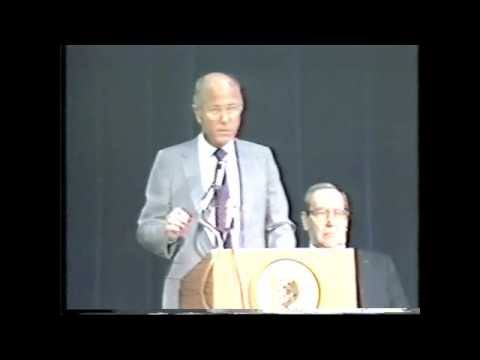
Arnaud de Borchgrave-"Media Responsibility vs. National Security ...
Arnaud de Borchgrave, then co-author of "Early Warning," a monthly intelligence bulletin, delivers a speech for the Ashbrook Center during a Major...

-
How do I book Arnaud de Borchgrave to speak at my event?
Our experienced booking agents have successfully helped clients around the world secure speakers like Arnaud de Borchgrave for speaking engagements, personal appearances, product endorsements, or corporate entertainment since 2002. Click the Check Availability button above and complete the form on this page to check availability for Arnaud de Borchgrave, or call our office at 1.800.698.2536 to discuss your upcoming event. One of our experienced agents will be happy to help you get speaking fee information and check availability for Arnaud de Borchgrave or any other speaker of your choice. -
What are the speaker fees for Arnaud de Borchgrave
Speaking fees for Arnaud de Borchgrave, or any other speakers and celebrities, are determined based on a number of factors and may change without notice. The estimated fees to book Arnaud de Borchgrave are $10,000 - $20,000 for live events and available upon request for virtual events. For the most current speaking fee to hire Arnaud de Borchgrave, click the Check Availability button above and complete the form on this page, or call our office at 1.800.698.2536 to speak directly with an experienced booking agent. -
What topics does Arnaud de Borchgrave speak about?
Arnaud de Borchgrave is a keynote speaker and industry expert whose speaking topics include Business, Corporate Strategy, Cybersecurity, ESG, Journalist, Leadership, Middle Eastern Heritage, Public Health, Security & Defense, Strategic Leadership, Sustainability, World Affairs -
Where does Arnaud de Borchgrave travel from?
Arnaud de Borchgrave generally travels from Washington, DC, USA, but can be booked for private corporate events, personal appearances, keynote speeches, or other performances. For more details, please contact an AAE Booking agent. -
Who is Arnaud de Borchgrave’s agent?
AAE Speakers Bureau has successfully booked keynote speakers like Arnaud de Borchgrave for clients worldwide since 2002. As a full-service speaker booking agency, we have access to virtually any speaker or celebrity in the world. Our agents are happy and able to submit an offer to the speaker or celebrity of your choice, letting you benefit from our reputation and long-standing relationships in the industry. Please click the Check Availability button above and complete the form on this page including the details of your event, or call our office at 1.800.698.2536, and one of our agents will assist you to book Arnaud de Borchgrave for your next private or corporate function. -
What is a full-service speaker booking agency?
AAE Speakers Bureau is a full-service speaker booking agency, meaning we can completely manage the speaker’s or celebrity’s engagement with your organization from the time of booking your speaker through the event’s completion. We provide all of the services you need to host Arnaud de Borchgrave or any other speaker of your choice, including offer negotiation, contractual assistance, accounting and billing, and event speaker travel and logistics services. When you book a speaker with us, we manage the process of hosting a speaker for you as an extension of your team. Our goal is to give our clients peace of mind and a best-in-class service experience when booking a speaker with us. -
Why is AAE Speakers Bureau different from other booking agencies?
If you’re looking for the best, unbiased speaker recommendations, paired with a top-notch customer service experience, you’re in the right place. At AAE Speakers Bureau, we exclusively represent the interests of our clients - professional organizations, companies, universities, and associations. We intentionally do not represent the speakers we feature or book. That is so we can present our clients with the broadest and best performing set of speaker options in the market today, and we can make these recommendations without any obligation to promote a specific speaker over another. This is why when our agents suggest a speaker for your event, you can be assured that they are of the highest quality with a history of proven success with our other clients.
Arnaud de Borchgrave is a keynote speaker and industry expert who speaks on a wide range of topics such as OPEN SOURCE, TRUSTED INFORMATION NETWORK FOR COUNTERTERRORISM, TRANSNATIONAL THREATS PROJECT. The estimated speaking fee range to book Arnaud de Borchgrave for your event is $10,000 - $20,000. Arnaud de Borchgrave generally travels from Washington, DC, USA and can be booked for (private) corporate events, personal appearances, keynote speeches, or other performances. Similar motivational celebrity speakers are Edward C. Chow, Avi Rubin, Matthew Olsen, Brian Penoyer and Guy Ben-Ari. Contact All American Speakers for ratings, reviews, videos and information on scheduling Arnaud de Borchgrave for an upcoming live or virtual event.
Need Quick Answers?
We are happy to help! Call us to speak with a booking agent about your event or specific speaker request.
Our celebrity booking agents can:
-
Gauge interest and check availability for speaking engagements, appearances or corporate events
-
Provide you with the speaking fee to book Arnaud de Borchgrave or other celebrity appearance fees
-
Give you personal recommendations for the best keynote speakers or celebrities
-
Assist you with any questions you have throughout the talent booking process
Speakers Similar to Arnaud de Borchgrave

Senior Associate at the Center for Strategic and...
View Profile
Professor of Computer Science & Technical Director of the...
View Profile
Former Director of NCTC, Cybersecurity Firm Leader,...
View Profile
Military Fellow, International Security Program
View Profile
Deputy Director and Senior Fellow, Defense-Industrial...
View Profile
Arleigh A. Burke Chair in Strategy
View Profile
Geopolitical Analyst, Author, Senior Fellow at CNAS
View Profile
English Comedy Magician, Card Shark Actor and Con Man
View Profile
Former NCTC Director, EVP at Leidos, NBC News Analyst
View Profile
William E. Simon Chair in Political Economy, Emeritus
View Profile
Senior Adviser (Non-resident), Americas Program
View Profile
Senior Adviser
View Profile
Senior Associate (Consultant), Global Health Policy Center
View Profile
Philosopher Thomas Pogge wants to ensure medications get to...
View Profile
Senior National Security Analyst, Former Deputy National...
View Profile
Emcee & Host, Teamwork Leader and WSIC Radio On-Air Host
View Profile
DEI Educator, Specialty in Imposter Syndrome & Anti-Racist...
View Profile
Emmy-Nominated News Reporter, CEO of Spotlight...
View Profile
Spy Recruiter, Chief of FBI Counterintelligence Behavioral...
View Profile
Co-Authors of "Just Action: How to Challenge Segregation...
View ProfileThis website is a resource for event professionals and strives to provide the most comprehensive catalog of thought leaders and industry experts to consider for speaking engagements. A listing or profile on this website does not imply an agency affiliation or endorsement by the talent.
All American Entertainment (AAE) exclusively represents the interests of talent buyers, and does not claim to be the agency or management for any speaker or artist on this site. AAE is a talent booking agency for paid events only. We do not handle requests for donation of time or media requests for interviews, and cannot provide celebrity contact information.
If you are the talent and wish to request a profile update or removal from our online directory, please submit a profile request form.