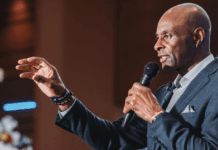
Devon Montgomery Pasha, a chief experience officer, outlined seven evaluation criteria for choosing speakers in a recent Meetings Today article. Most event planners don’t use a systematic framework. They default to credentials, availability, or name recognition. Here’s what many don’t realize: speaker selection isn’t just logistics. It’s a strategic architecture decision that shapes whether your event achieves its purpose.
Think of it this way. You can have the right format, the right messaging, the right timing. But if your speaker doesn’t fit the moment, everything else works against you instead of with you.
Why speaker selection matters more than you think
Most guidance on speaker selection focuses on finding talented speakers: experience, speaking credits, audience reviews. All solid filters. But there’s a difference between a good speaker and the right speaker for your moment.
Here’s what we’ve learned from orchestrating 20,000+ events: the speakers who tend to drive measurable outcomes often aren’t the ones with the longest CVs. They’re the ones whose role in your event is crystal clear. Are they there to challenge assumptions? Build belonging? Inspire specific action? Create psychological safety?
When you can answer that precisely, you’re not just booking a speaker. You’re positioning that speaker as part of your event strategy. You’re designing them into your event’s architecture, making sure they nail the moment you need.
That shift, from “who’s available” to “what role does this speaker play,” tends to be where better outcomes start. It’s often the difference between filling a slot on your agenda and intentionally engineering a moment that moves your attendees.
Seven questions that reveal strategic fit
Think of these as diagnostic questions. Each one reveals whether a speaker genuinely fits this moment in your event. These seven aren’t about finding the most talented speaker available. They’re about finding the right speaker for the specific transformation your event needs to create.
Not all questions apply equally to every event. But together, they give you a framework for thinking strategically about speaker selection instead of reactively scrambling through availability calendars.
What’s the speaker’s role?
Question 1: What specific transformation do I want attendees to experience during this speaker’s time on stage?
Get specific here. Not “inspire them” but “help them see change as an opportunity, not a threat.” Not “inform them” but “show them what’s possible with limited resources.” The clearer your answer, the easier it becomes to evaluate whether a speaker can actually deliver it.
When you can articulate this precisely, you stop auditioning speakers and start evaluating fit. You know what you’re looking for.
Question 2: What is this speaker’s positioning within the larger event narrative?
Are they opening minds before you deliver core messaging? Reinforcing what attendees have learned? Modeling the behavior you want to see? Speaker role shifts depending on where they sit in your event. A keynote that works as a closer might fall flat as an opener, and vice versa.
Why this matters: Role clarity tends to eliminate most of the ambiguity. You’re not asking “Will they be good?” You’re asking “Will they serve this specific purpose?” That’s a completely different question, and it usually leads to better decisions.
Can they deliver it?
Question 3: Does this speaker have lived experience or credibility in this specific area?
Credentials matter, but they’re not the only measure of fit. A brilliant technologist might not deliver the empathy your event needs. Someone with lived experience in a topic often connects more deeply than someone with academic credentials alone.
Think about what your audience needs to hear from whom. Sometimes that’s expertise. Sometimes it’s “I’ve been where you are, and here’s what I learned.”
Question 4: Does their delivery style match the emotional outcome I need?
Jon Dorenbos opens minds with magic before delivering his message. That format matches his purpose. His authenticity, vulnerability, and willingness to be imperfect create connection. Can the speaker be themselves on stage? Do they bring genuine humanity or polished performance?
“Polished doesn’t mean perfect,” Dorenbos emphasizes. Audiences connect with real people, not flawless delivery. They remember how you made them feel, not how smoothly you performed.
Why this matters: Delivery style tends to either support your purpose or work against it. You’re matching method to message. If you want your attendees to be authentic with each other, your speaker really needs to model that authenticity first.
How do they show up?
Question 5: Is this speaker adaptable to our audience and event format?
The best speakers adjust without losing authenticity. They read the room. They customize examples without compromising core messaging. Can they pivot if needed? Will they show up prepared and flexible?
Why this matters: Adaptability determines whether a speaker serves your event or just delivers a prepared speech. An adaptable speaker can sense when the room needs something different and adjust in real time.
Question 6: Do they bring authenticity and vulnerability, or polish and performance?
This matters more than you might think. Authenticity signals respect for your audience’s intelligence. Vulnerability builds trust. Performance creates distance. Which does your event need?
Authenticity often means being willing to be imperfect. A speaker who shares a genuine stumble, who admits uncertainty, who shows up as a real person, creates a different kind of connection than one who polishes every moment. That human quality is what your attendees will actually remember.
Why this matters: How speakers show up is part of your event’s message. If you want attendees to be genuine with each other, your speakers need to model that first. It sets the tone for everything else.
What’s the outcome?
Question 7: How will I know this speaker moved the needle for attendees?
Define success before you book. Behavior change? Relationship-building? Specific insights they’ll implement? Shift in how they think about a challenge?
Outcomes start with clarity about what you’re measuring. Don’t wait until after the event to figure out what success looks like. Define it now.
Why this matters: This prevents the common trap of measuring satisfaction instead of impact. A person can rate your event 5 out of 5 and never make a single business decision as a result. What outcome actually matters for your organization?
Strategic fit in action
Here’s how strategic speaker selection works in practice. The first two are real client experiences. The third is your moment.
Culture and innovation (real case)
Bennett Thrasher LLP was transitioning their annual event to virtual. They could have booked a well-known speaker available that month. Instead, they asked themselves a strategic question: what does our audience need to feel about innovation right now?
The answer: inspired, grounded, human.
That clarity led to Pascal Finette. Result: 47 percent attendance increase, the company’s best event ever. Fame wasn’t the variable that moved the needle. Strategic fit was. For that event, at that moment, for that audience, the match was perfect. That’s what drove the outcome.
Connection and lived experience (real case)
A nonprofit running a Mental Health Awareness event asked a different question: what emotional role must this speaker play? Not “inform people about mental health” but “show attendees that someone they can relate to has navigated this and emerged stronger.”
That clarity led to a speaker with lived experience, not a clinical expert. Their testimonial: “Our audience said it was our best event yet.”
The speaker’s ability to connect came from their own journey, not from credentials on paper.
Your event (now your turn)
What’s the strategic fit question your event needs to answer? Are you building trust in leadership? Reimagining culture? Celebrating what’s possible? Are you helping attendees navigate change or deepening their expertise?
The speaker you need is determined by that answer. Not your budget. Not what’s available next month. Purpose first.
Once you know what transformation your event needs to create, the speaker selection becomes clear. You’re not choosing from everyone available. You’re choosing from everyone who can deliver that specific outcome.
Why this matters for outcomes
Good speakers drive engagement. Systematic speaker selection makes that predictable instead of dependent on luck or gut instinct.
When you’ve asked the seven questions and matched the speaker to your purpose, outcomes follow. Client testimonials show this: “best event ever,” “highest-reviewed,” “people will never forget.” These translate to measurable differences in attendance, retention, engagement scores, and behavior change.
Bennett Thrasher’s 47 percent attendance increase illustrates why. The speaker fit the event’s purpose well enough that people wanted to attend. Peer networks heard about it and recommended it. That’s how word of mouth drives registration increases.
The shift from “which speaker should we book” to “what role does this speaker play” changes what outcomes you get. That’s the business case for strategic speaker selection.
Moving forward
Most event planners have booked dozens of speakers. You know what engaging content looks like. You know your audience. You probably have good instincts about what will land.
What you might not have is a systematic framework for strategic fit. A way to answer “Is this the right speaker for this moment?” with real confidence instead of hoping you got it right.
That’s where strategy comes in. When you’re ready to approach speaker selection as architecture instead of logistics, when you want to position a speaker for maximum impact, or when you need to brief speakers on the role they’re playing in your event strategy, we’re here.
We help planners think through what transformation their event needs to create. Then we help you find the speaker who can nail it. Not the most famous speaker. The right speaker for your moment.