Dr. Teresa Stewart-Meli
Keynote Speaker: Neurodiversity & Disability Advocate; Adaptive Music Accessibility Expert; Founder And President of Resonance Sound Collective; Owner of Musicology Denton; Author of "Piano Teacher's Guide to the Extra-Ordinary Student"; Co-Author of "Diversity in Music"
-
Travels From:
-
Speaking Fee:
-
Categories:
Dr. Teresa Stewart-Meli Biography
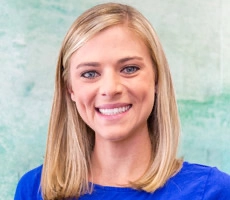
Dr. Teresa Stewart-Meli, known as "Dr. T," is an educator, author, speaker, conductor and diversity advocate whose work explores disability, neurodiversity, access, resilience, belonging and the ways our definitions of ability can either create opportunity or exclusion. A disabled woman and stroke survivor, Dr. Stewart-Meli combines lived experience with decades of teaching, leadership and scholarship to challenge assumptions about who belongs and what meaningful access can look like.
Dr. Stewart-Meli is the founder of Musicology Denton and president of the Resonance Sound Collective. She is co-author of "Diversity in Music Education," published by Bloomsbury in 2025, and author of "The Piano Teacher's Guidebook to the Extra-Ordinary Student," published by Bloomsbury in 2027. Her speaking blends research, storytelling, humor and practical insight, inviting audiences to move beyond compliance and consider what becomes possible when people are given genuine access to participate as themselves.
Contact a speaker booking agent to check availability on Dr. Teresa Stewart-Meli and other top speakers and celebrities.
Dr. Teresa Stewart-Meli Speaking Topics
Different Minds, Extraordinary Music: The Joy of Teaching Neurodiverse Students
What happens when we stop asking students to learn music the way we were taught to teach it?
Neurodiverse students may experience attention, communication, sensory input, movement, notation, motivation, and performance in ways that do not fit traditional expectations. Yet those same students may bring extraordinary creativity, musical insight, intense interests, pattern recognition, memory, and ways of hearing music that can transform not only their learning, but our teaching.
In this engaging and highly practical presentation, Dr. Teresa Stewart-Meli combines research, lived experience, humor, and stories from decades of music teaching to challenge the idea that adaptation means lowering expectations. Instead, she shows educators how small changes in communication, environment, pacing, repertoire, movement, notation, and assessment can remove unnecessary barriers while preserving musical rigor.
Designed for music educators across specialties, this presentation moves beyond diagnosis and accommodation to explore a larger question: What can happen when teachers become curious about how a student learns rather than frustrated by how they do not?
Participants are invited to rethink inherited assumptions about attention, behavior, progress, and musical success and to discover the unexpected joy that can emerge when teachers give students more than one way to participate, communicate, and demonstrate what they know.
Attendee Results:
- Recognize how traditional music-teaching expectations can unintentionally create barriers for neurodiverse learners.
- Understand the difference between adapting access to learning and reducing musical expectations.
- Learn practical strategies for communication, sensory environment, movement, lesson or rehearsal structure, notation, repertoire, motivation, and assessment.
- Identify strengths that may be overlooked when teachers focus primarily on attention, behavior, or perceived deficits.
- Develop a more flexible approach to teaching that can benefit neurodivergent and neurotypical musicians alike.
- Reframe challenging teaching moments as opportunities for curiosity, creativity, and pedagogical growth.
- Leave with immediately applicable strategies for creating music-learning environments where more students can participate meaningfully, develop artistic ownership, and experience the joy of making music.
Beyond the Average: Teaching the Extra-Ordinary Music Student
What happens when a student does not fit the assumptions built into traditional music education?
Some students are neurodivergent. Some are gifted. Some are twice-exceptional, demonstrating remarkable ability alongside significant learning challenges. Others experience physical differences that affect how they access an instrument, notation, movement, rehearsal, or performance. What these students often have in common is not a lack of potential, but a mismatch between the learner and the system designed to teach them.
In this thought-provoking and practical presentation, Dr. Teresa Stewart-Meli invites music educators to reconsider the idea of the “average” student and examine how inherited expectations surrounding attention, pacing, notation, physical technique, behavior, communication, and assessment can unintentionally create barriers to musical participation.
Drawing from research, decades of teaching experience, and real-world student examples, Dr. T explores how educators can identify the difference between a true musical challenge and a barrier created by the way instruction is delivered. Participants will examine practical approaches to teaching neurodivergent, gifted, twice-exceptional, and physically diverse musicians while preserving meaningful artistic expectations.
This presentation is not about creating a separate method for every type of learner. It is about developing the flexibility to recognize individual strengths, respond intentionally to barriers, and create multiple pathways toward the same musical goals.
Ultimately, teaching the extra-ordinary student asks educators to reconsider a fundamental question: Are we measuring what students are capable of doing—or how successfully they can conform to the way we have always taught?
Attendee Results:
- Recognize how traditional assumptions about the “average” music student can unintentionally exclude capable learners.
- Understand the characteristics and instructional needs of neurodivergent, gifted, twice-exceptional, and physically diverse musicians.
- Learn to distinguish between musical difficulty and barriers created by environment, communication, pacing, notation, or instructional design.
- Explore practical adaptations that preserve musical rigor while increasing access and participation.
- Identify student strengths that may be hidden by behavior, disability, asynchronous development, or unconventional learning styles.
- Develop flexible approaches to repertoire, pacing, physical setup, communication, assessment, and performance.
- Reconsider conventional measures of progress and create more meaningful ways for students to demonstrate musical understanding.
- Leave with a framework for building learning environments in which difference is anticipated, ability is not underestimated, and every student has a genuine opportunity to participate musically.
When Ability Changes: From Disability to Advocacy
What happens when the assumptions you have about your own body, independence, and ability suddenly change?
After experiencing significant health challenges and acquiring a disability, Dr. Teresa Stewart-Meli began asking questions she had never expected to ask not only about recovery, but about the way we define ability itself. Her search for answers led her to the study of neuroplasticity: the brain’s remarkable capacity to change, reorganize, and develop new pathways in response to experience.
But neuroplasticity became more than a subject of personal interest. It changed the way she understood education, disability, and human potential.
As an educator and researcher, Dr. T began recognizing connections between her own experience and the students she had spent decades teaching. Neurodivergent, gifted, twice-exceptional, and physically diverse learners were frequently being evaluated according to systems designed around a narrow range of bodies, minds, communication styles, and ways of demonstrating ability. Her research increasingly shifted from asking how individuals could adapt themselves to existing systems to asking how those systems could become more responsive to human variation.
In this personal, research-informed presentation, Dr. T weaves lived experience with disability studies, neuroplasticity, education, and inclusive practice. She examines the difference between supporting adaptation and expecting disabled people to continually overcome inaccessible environments. She also challenges familiar narratives about resilience, independence, and success, asking audiences to consider how much of what we call limitation resides within an individual—and how much is created by the structures surrounding them.
This is not a story about disability disappearing. It is a story about disability changing the questions.
Dr. T invites audiences to consider what becomes possible when we stop treating difference as an exception to be managed and begin designing communities, classrooms, workplaces, and institutions that expect human variation from the beginning.
Attendee Results:
- Explore how acquiring a disability can challenge deeply held assumptions about ability, independence, identity, and success.
- -Understand neuroplasticity as one lens for examining human adaptation and change without treating recovery as a requirement for a meaningful life.
- Examine the distinction between an individual limitation and a barrier created by an environment, institution, or social expectation.
- Recognize connections among disability, neurodiversity, physical variation, and broader concepts of human difference.
- Consider how traditional definitions of resilience can unintentionally place responsibility for access on disabled individuals rather than the systems surrounding them.
- Learn how principles of inclusive and adaptive design can increase meaningful participation in education, workplaces, organizations, and communities.
- Reconsider the question “What is this person capable of?” and replace it with a more useful one: “What might be possible if unnecessary barriers were removed?”
- Leave with a framework for moving from accommodation after a problem occurs toward environments in which human variation is anticipated from the beginning.
Beyond Accommodation: Designing for Difference from the Beginning
What if access did not begin with someone having to ask for it?
Too often, schools, workplaces, organizations, and public spaces are designed around an assumed “average” person. When someone falls outside that expectation, the responsibility shifts to the individual to disclose a disability, explain a need, request an accommodation, and sometimes prove that the barrier is real.
Dr. Teresa Stewart-Meli invites audiences to consider a different approach: What if human variation were expected from the beginning?
Drawing from disability studies, inclusive education, Universal Design, lived experience, and her research into neurodivergent, gifted, twice-exceptional, and physically diverse learners, Dr. T examines the difference between providing an accommodation and creating an environment that is fundamentally accessible. She explores how seemingly ordinary expectations surrounding communication, scheduling, movement, sensory environments, technology, participation, productivity, and professional behavior can unintentionally exclude people long before anyone identifies the problem.
This presentation moves beyond checklists and legal compliance to examine the assumptions underneath the systems we build. Dr. T challenges audiences to recognize that accessibility is not simply about ramps, extended time, or individual exceptions. It is about creating multiple meaningful ways for people to enter, participate, communicate, contribute, and succeed.
Through research, storytelling, lived experience, and practical examples, participants will learn to recognize barriers that may be invisible to those who do not encounter them. More importantly, they will begin to see accessibility not as an additional burden, but as an opportunity to design stronger, more flexible environments for everyone.
The goal is not to anticipate every possible disability. It is to build systems flexible enough that difference does not automatically become disadvantage.
Attendee Results:
- Understand the difference between individual accommodation and inclusive design.
- Recognize how assumptions about the “average” person can become hidden barriers within organizations, classrooms, workplaces, and events.
- Identify environmental, communication, sensory, procedural, and cultural barriers that may limit participation.
- Explore principles of Universal Design and flexible access that can benefit disabled and nondisabled participants alike.
- -Examine why requiring people to repeatedly disclose, explain, and justify their needs can itself become a barrier.
- Learn practical ways to provide multiple pathways for communication, participation, learning, and contribution.
- Move beyond a compliance-based understanding of disability access toward a culture of anticipated inclusion.
- Leave with a central question for evaluating any system: “Who might have difficulty accessing this, and is that difficulty truly necessary?”
Hidden in Plain Sight: When Ability and Disability Exist Together
We often talk about ability and disability as though they exist at opposite ends of a spectrum. A person is either capable or struggling, independent or dependent, gifted or disabled.
Human beings are rarely that simple.
A person can be extraordinarily capable in one area while requiring significant support in another. Intelligence can coexist with executive-function challenges. Exceptional creativity can coexist with dyslexia. Advanced academic or artistic ability can coexist with autism, ADHD, anxiety, physical disability, or chronic limitations. Yet when people do not fit our expectations of what disability—or ability—is supposed to look like, one part of their experience is often overlooked.
Drawing from her research with gifted and twice-exceptional learners, disability studies, and her own lived experience with acquired disability, Dr. Teresa Stewart-Meli explores what happens when strengths and support needs exist simultaneously.
This presentation examines masking, asynchronous development, invisible disability, assumptions about independence, and the tendency to use competence in one area as evidence that someone should not require support elsewhere. Dr. T challenges the idea that a person must appear consistently impaired to be legitimately disabled—or consistently exceptional to be recognized as gifted.
Through research, storytelling, and real-world examples, audiences will examine how schools, workplaces, families, and institutions can unintentionally miss people whose abilities and disabilities complicate familiar categories.
At the heart of the presentation is a deceptively simple idea: Ability is not the opposite of disability.
When we begin to understand people as complex combinations of strengths, challenges, identities, experiences, and needs, we can move away from deciding whether someone is “capable enough” or “disabled enough” and toward creating environments where support and high expectations can exist at the same time.
Attendee Results:
- Understand how exceptional ability and significant disability can coexist within the same person.
- Explore twice-exceptionality as a framework for understanding uneven profiles of strengths and support needs.
- Recognize how masking and invisible disability can prevent individuals from receiving appropriate support.
- Examine why demonstrated competence in one area does not eliminate disability or support needs in another.
- Identify assumptions surrounding intelligence, independence, productivity, behavior, and what disability is expected to “look like.”
- Understand how disability may conceal giftedness and how giftedness may conceal disability.
- Develop more nuanced ways of responding to individuals whose abilities do not fit traditional categories.
- Leave with a more useful question than “Is this person capable?”: “What are this person’s strengths, what barriers are present, and what support allows those strengths to emerge?”
Dr. Teresa Stewart-Meli Videos


How do I book Dr. Teresa Stewart-Meli to speak at my event?
Our experienced booking agents have successfully helped clients around the world secure speakers like Dr. Teresa Stewart-Meli for speaking engagements, personal appearances, product endorsements, or corporate entertainment since 2002. Click the Check Schedule button above and complete the form on this page to check availability for Dr. Teresa Stewart-Meli, or call our office at 1.800.698.2536 to discuss your upcoming event. One of our experienced agents will be happy to help you get speaking fee information and check availability for Dr. Teresa Stewart-Meli or any other speaker of your choice.
How much does it cost to book Dr. Teresa Stewart-Meli for a speaking engagement?
Speaking fees for Dr. Teresa Stewart-Meli, or any other speakers and celebrities, are determined based on a number of factors and may change without notice. The estimated fees to book Dr. Teresa Stewart-Meli are Below $10,000 for live events and Below $10,000 for virtual events. For the most current speaking fee to hire Dr. Teresa Stewart-Meli, click the Check Schedule button above and complete the form on this page, or call our office at 1.800.698.2536 to speak directly with an experienced booking agent.
What topics does Dr. Teresa Stewart-Meli speak about?
Dr. Teresa Stewart-Meli is a keynote speaker and industry expert who speaks on a wide range of topics such as Music, Neurodiversity, Belonging, Educational Motivational, Thought Leadership, Disruptive Thinking and Disability.
Where does Dr. Teresa Stewart-Meli travel from?
Dr. Teresa Stewart-Meli generally travels from Denton, TX, USA and can be booked for (private) corporate events, personal appearances, keynote speeches, or other performances.
Who is the agent for Dr. Teresa Stewart-Meli?
All American Speakers Bureau has successfully secured keynote speakers like Dr. Teresa Stewart-Meli for clients worldwide since 2002. As a full-service speaker booking agency, we have access to virtually any speaker or celebrity in the world. Our agents are happy and able to submit an offer to the speaker or celebrity of your choice, letting you benefit from our reputation and long-standing relationships in the industry. Please click the Check Schedule button above and complete the form on this page including the details of your event, or call our office at 1.800.698.2536, and one of our agents will assist you to book Dr. Teresa Stewart-Meli for your next private or corporate function.
What is a full-service speaker booking agency?
All American Speakers Bureau is a full-service speaker booking agency, meaning we can completely manage the speaker’s or celebrity’s engagement with your organization from the time of booking your speaker through the event’s completion. We provide all of the services you need to host Dr. Teresa Stewart-Meli or any other speaker of your choice, including offer negotiation, contractual assistance, accounting and billing, and event speaker travel and logistics services. When you book a speaker with us, we manage the process of hosting a speaker for you as an extension of your team. Our goal is to give our clients peace of mind and a best-in-class service experience when booking a speaker with us.
Why is All American Speakers Bureau different from other booking agencies?
If you’re looking for the best speaker recommendations, paired with a top-notch customer service experience, you’re in the right place. At All American Speakers Bureau, we exclusively represent the interests of our clients - professional organizations, companies, universities, and associations. We intentionally do not represent the speakers we feature or book. That is so we can present our clients with the broadest and best performing set of speaker options in the market today, and we can make these recommendations without any obligation to promote a specific speaker over another. This is why when our agents suggest a speaker for your event, you can be assured that they are of the highest quality with a history of proven success with our other clients.
Dr. Teresa Stewart-Meli is a keynote speaker and industry expert who speaks on a wide range of topics including Music, Neurodiversity and Belonging. The estimated speaking fee range to book Dr. Teresa Stewart-Meli for live events is Below $10,000, and for virtual events Below $10,000. Dr. Teresa Stewart-Meli generally travels from Denton, TX, USA and can be booked for (private) corporate events, personal appearances, keynote speeches, or other performances. Similar motivational celebrity speakers are Felicia M. L. Davis, Kodi Lee and Katherine McCord. Contact All American Speakers for ratings, reviews, videos and information on scheduling Dr. Teresa Stewart-Meli for an upcoming event.
SPEAKING TOPICS
Dr. Teresa Stewart-Meli Speaking Topics
-
Neurodiversity, Inclusive Teaching & Student Engagement
Different Minds, Extraordinary Music: The Joy of Teaching Neurodiverse Students
What happens when we stop asking students to learn music the way we were taught to teach it?
Neurodiverse students may experience attention, communication, sensory input, movement, notation, motivation, and performance in ways that do not fit traditional expectations. Yet those same students may bring extraordinary creativity, musical insight, intense interests, pattern recognition, memory, and ways of hearing music that can transform not only their learning, but our teaching.
In this engaging and highly practical presentation, Dr. Teresa Stewart-Meli combines research, lived experience, humor, and stories from decades of music teaching to challenge the idea that adaptation means lowering expectations. Instead, she shows educators how small changes in communication, environment, pacing, repertoire, movement, notation, and assessment can remove unnecessary barriers while preserving musical rigor.
Designed for music educators across specialties, this presentation moves beyond diagnosis and accommodation to explore a larger question: What can happen when teachers become curious about how a student learns rather than frustrated by how they do not?
Participants are invited to rethink inherited assumptions about attention, behavior, progress, and musical success and to discover the unexpected joy that can emerge when teachers give students more than one way to participate, communicate, and demonstrate what they know.
Attendee Results:
- Recognize how traditional music-teaching expectations can unintentionally create barriers for neurodiverse learners.
- Understand the difference between adapting access to learning and reducing musical expectations.
- Learn practical strategies for communication, sensory environment, movement, lesson or rehearsal structure, notation, repertoire, motivation, and assessment.
- Identify strengths that may be overlooked when teachers focus primarily on attention, behavior, or perceived deficits.
- Develop a more flexible approach to teaching that can benefit neurodivergent and neurotypical musicians alike.
- Reframe challenging teaching moments as opportunities for curiosity, creativity, and pedagogical growth.
- Leave with immediately applicable strategies for creating music-learning environments where more students can participate meaningfully, develop artistic ownership, and experience the joy of making music.
-
Inclusive Teaching, Human Variation & Musical Potential
Beyond the Average: Teaching the Extra-Ordinary Music Student
What happens when a student does not fit the assumptions built into traditional music education?
Some students are neurodivergent. Some are gifted. Some are twice-exceptional, demonstrating remarkable ability alongside significant learning challenges. Others experience physical differences that affect how they access an instrument, notation, movement, rehearsal, or performance. What these students often have in common is not a lack of potential, but a mismatch between the learner and the system designed to teach them.
In this thought-provoking and practical presentation, Dr. Teresa Stewart-Meli invites music educators to reconsider the idea of the “average” student and examine how inherited expectations surrounding attention, pacing, notation, physical technique, behavior, communication, and assessment can unintentionally create barriers to musical participation.
Drawing from research, decades of teaching experience, and real-world student examples, Dr. T explores how educators can identify the difference between a true musical challenge and a barrier created by the way instruction is delivered. Participants will examine practical approaches to teaching neurodivergent, gifted, twice-exceptional, and physically diverse musicians while preserving meaningful artistic expectations.
This presentation is not about creating a separate method for every type of learner. It is about developing the flexibility to recognize individual strengths, respond intentionally to barriers, and create multiple pathways toward the same musical goals.
Ultimately, teaching the extra-ordinary student asks educators to reconsider a fundamental question: Are we measuring what students are capable of doing—or how successfully they can conform to the way we have always taught?
Attendee Results:
- Recognize how traditional assumptions about the “average” music student can unintentionally exclude capable learners.
- Understand the characteristics and instructional needs of neurodivergent, gifted, twice-exceptional, and physically diverse musicians.
- Learn to distinguish between musical difficulty and barriers created by environment, communication, pacing, notation, or instructional design.
- Explore practical adaptations that preserve musical rigor while increasing access and participation.
- Identify student strengths that may be hidden by behavior, disability, asynchronous development, or unconventional learning styles.
- Develop flexible approaches to repertoire, pacing, physical setup, communication, assessment, and performance.
- Reconsider conventional measures of progress and create more meaningful ways for students to demonstrate musical understanding.
- Leave with a framework for building learning environments in which difference is anticipated, ability is not underestimated, and every student has a genuine opportunity to participate musically.
-
Disability, Neuroplasticity, Access & Human Potential
When Ability Changes: From Disability to Advocacy
What happens when the assumptions you have about your own body, independence, and ability suddenly change?
After experiencing significant health challenges and acquiring a disability, Dr. Teresa Stewart-Meli began asking questions she had never expected to ask not only about recovery, but about the way we define ability itself. Her search for answers led her to the study of neuroplasticity: the brain’s remarkable capacity to change, reorganize, and develop new pathways in response to experience.
But neuroplasticity became more than a subject of personal interest. It changed the way she understood education, disability, and human potential.
As an educator and researcher, Dr. T began recognizing connections between her own experience and the students she had spent decades teaching. Neurodivergent, gifted, twice-exceptional, and physically diverse learners were frequently being evaluated according to systems designed around a narrow range of bodies, minds, communication styles, and ways of demonstrating ability. Her research increasingly shifted from asking how individuals could adapt themselves to existing systems to asking how those systems could become more responsive to human variation.
In this personal, research-informed presentation, Dr. T weaves lived experience with disability studies, neuroplasticity, education, and inclusive practice. She examines the difference between supporting adaptation and expecting disabled people to continually overcome inaccessible environments. She also challenges familiar narratives about resilience, independence, and success, asking audiences to consider how much of what we call limitation resides within an individual—and how much is created by the structures surrounding them.
This is not a story about disability disappearing. It is a story about disability changing the questions.
Dr. T invites audiences to consider what becomes possible when we stop treating difference as an exception to be managed and begin designing communities, classrooms, workplaces, and institutions that expect human variation from the beginning.
Attendee Results:
- Explore how acquiring a disability can challenge deeply held assumptions about ability, independence, identity, and success.
- -Understand neuroplasticity as one lens for examining human adaptation and change without treating recovery as a requirement for a meaningful life.
- Examine the distinction between an individual limitation and a barrier created by an environment, institution, or social expectation.
- Recognize connections among disability, neurodiversity, physical variation, and broader concepts of human difference.
- Consider how traditional definitions of resilience can unintentionally place responsibility for access on disabled individuals rather than the systems surrounding them.
- Learn how principles of inclusive and adaptive design can increase meaningful participation in education, workplaces, organizations, and communities.
- Reconsider the question “What is this person capable of?” and replace it with a more useful one: “What might be possible if unnecessary barriers were removed?”
- Leave with a framework for moving from accommodation after a problem occurs toward environments in which human variation is anticipated from the beginning.
-
Disability, Inclusive Design & Organizational Access
Beyond Accommodation: Designing for Difference from the Beginning
What if access did not begin with someone having to ask for it?
Too often, schools, workplaces, organizations, and public spaces are designed around an assumed “average” person. When someone falls outside that expectation, the responsibility shifts to the individual to disclose a disability, explain a need, request an accommodation, and sometimes prove that the barrier is real.
Dr. Teresa Stewart-Meli invites audiences to consider a different approach: What if human variation were expected from the beginning?
Drawing from disability studies, inclusive education, Universal Design, lived experience, and her research into neurodivergent, gifted, twice-exceptional, and physically diverse learners, Dr. T examines the difference between providing an accommodation and creating an environment that is fundamentally accessible. She explores how seemingly ordinary expectations surrounding communication, scheduling, movement, sensory environments, technology, participation, productivity, and professional behavior can unintentionally exclude people long before anyone identifies the problem.
This presentation moves beyond checklists and legal compliance to examine the assumptions underneath the systems we build. Dr. T challenges audiences to recognize that accessibility is not simply about ramps, extended time, or individual exceptions. It is about creating multiple meaningful ways for people to enter, participate, communicate, contribute, and succeed.
Through research, storytelling, lived experience, and practical examples, participants will learn to recognize barriers that may be invisible to those who do not encounter them. More importantly, they will begin to see accessibility not as an additional burden, but as an opportunity to design stronger, more flexible environments for everyone.
The goal is not to anticipate every possible disability. It is to build systems flexible enough that difference does not automatically become disadvantage.
Attendee Results:
- Understand the difference between individual accommodation and inclusive design.
- Recognize how assumptions about the “average” person can become hidden barriers within organizations, classrooms, workplaces, and events.
- Identify environmental, communication, sensory, procedural, and cultural barriers that may limit participation.
- Explore principles of Universal Design and flexible access that can benefit disabled and nondisabled participants alike.
- -Examine why requiring people to repeatedly disclose, explain, and justify their needs can itself become a barrier.
- Learn practical ways to provide multiple pathways for communication, participation, learning, and contribution.
- Move beyond a compliance-based understanding of disability access toward a culture of anticipated inclusion.
- Leave with a central question for evaluating any system: “Who might have difficulty accessing this, and is that difficulty truly necessary?”
-
Disability, Twice-Exceptionality & Hidden Ability
Hidden in Plain Sight: When Ability and Disability Exist Together
We often talk about ability and disability as though they exist at opposite ends of a spectrum. A person is either capable or struggling, independent or dependent, gifted or disabled.
Human beings are rarely that simple.
A person can be extraordinarily capable in one area while requiring significant support in another. Intelligence can coexist with executive-function challenges. Exceptional creativity can coexist with dyslexia. Advanced academic or artistic ability can coexist with autism, ADHD, anxiety, physical disability, or chronic limitations. Yet when people do not fit our expectations of what disability—or ability—is supposed to look like, one part of their experience is often overlooked.
Drawing from her research with gifted and twice-exceptional learners, disability studies, and her own lived experience with acquired disability, Dr. Teresa Stewart-Meli explores what happens when strengths and support needs exist simultaneously.
This presentation examines masking, asynchronous development, invisible disability, assumptions about independence, and the tendency to use competence in one area as evidence that someone should not require support elsewhere. Dr. T challenges the idea that a person must appear consistently impaired to be legitimately disabled—or consistently exceptional to be recognized as gifted.
Through research, storytelling, and real-world examples, audiences will examine how schools, workplaces, families, and institutions can unintentionally miss people whose abilities and disabilities complicate familiar categories.
At the heart of the presentation is a deceptively simple idea: Ability is not the opposite of disability.
When we begin to understand people as complex combinations of strengths, challenges, identities, experiences, and needs, we can move away from deciding whether someone is “capable enough” or “disabled enough” and toward creating environments where support and high expectations can exist at the same time.
Attendee Results:
- Understand how exceptional ability and significant disability can coexist within the same person.
- Explore twice-exceptionality as a framework for understanding uneven profiles of strengths and support needs.
- Recognize how masking and invisible disability can prevent individuals from receiving appropriate support.
- Examine why demonstrated competence in one area does not eliminate disability or support needs in another.
- Identify assumptions surrounding intelligence, independence, productivity, behavior, and what disability is expected to “look like.”
- Understand how disability may conceal giftedness and how giftedness may conceal disability.
- Develop more nuanced ways of responding to individuals whose abilities do not fit traditional categories.
- Leave with a more useful question than “Is this person capable?”: “What are this person’s strengths, what barriers are present, and what support allows those strengths to emerge?”
VIDEO
Dr. Teresa Stewart-Meli Videos
BOOKS
FAQS
-
How do I book Dr. Teresa Stewart-Meli to speak at my event?
Our experienced booking agents have successfully helped clients around the world secure speakers like Dr. Teresa Stewart-Meli for speaking engagements, personal appearances, product endorsements, or corporate entertainment since 2002. Click the Check Schedule button above and complete the form on this page to check availability for Dr. Teresa Stewart-Meli, or call our office at 1.800.698.2536 to discuss your upcoming event. One of our experienced agents will be happy to help you get speaking fee information and check availability for Dr. Teresa Stewart-Meli or any other speaker of your choice. -
How much does it cost to book Dr. Teresa Stewart-Meli for a speaking engagement?
Speaking fees for Dr. Teresa Stewart-Meli, or any other speakers and celebrities, are determined based on a number of factors and may change without notice. The estimated fees to book Dr. Teresa Stewart-Meli are Below $10,000 for live events and Below $10,000 for virtual events. For the most current speaking fee to hire Dr. Teresa Stewart-Meli, click the Check Schedule button above and complete the form on this page, or call our office at 1.800.698.2536 to speak directly with an experienced booking agent. -
What topics does Dr. Teresa Stewart-Meli speak about?
Dr. Teresa Stewart-Meli is a keynote speaker and industry expert who speaks on a wide range of topics such as Music, Neurodiversity, Belonging, Educational Motivational, Thought Leadership, Disruptive Thinking and Disability. -
Where does Dr. Teresa Stewart-Meli travel from?
Dr. Teresa Stewart-Meli generally travels from Denton, TX, USA and can be booked for (private) corporate events, personal appearances, keynote speeches, or other performances. -
Who is the agent for Dr. Teresa Stewart-Meli?
All American Speakers Bureau has successfully secured keynote speakers like Dr. Teresa Stewart-Meli for clients worldwide since 2002. As a full-service speaker booking agency, we have access to virtually any speaker or celebrity in the world. Our agents are happy and able to submit an offer to the speaker or celebrity of your choice, letting you benefit from our reputation and long-standing relationships in the industry. Please click the Check Schedule button above and complete the form on this page including the details of your event, or call our office at 1.800.698.2536, and one of our agents will assist you to book Dr. Teresa Stewart-Meli for your next private or corporate function. -
What is a full-service speaker booking agency?
All American Speakers Bureau is a full-service speaker booking agency, meaning we can completely manage the speaker’s or celebrity’s engagement with your organization from the time of booking your speaker through the event’s completion. We provide all of the services you need to host Dr. Teresa Stewart-Meli or any other speaker of your choice, including offer negotiation, contractual assistance, accounting and billing, and event speaker travel and logistics services. When you book a speaker with us, we manage the process of hosting a speaker for you as an extension of your team. Our goal is to give our clients peace of mind and a best-in-class service experience when booking a speaker with us. -
Why is All American Speakers Bureau different from other booking agencies?
If you’re looking for the best speaker recommendations, paired with a top-notch customer service experience, you’re in the right place. At All American Speakers Bureau, we exclusively represent the interests of our clients - professional organizations, companies, universities, and associations. We intentionally do not represent the speakers we feature or book. That is so we can present our clients with the broadest and best performing set of speaker options in the market today, and we can make these recommendations without any obligation to promote a specific speaker over another. This is why when our agents suggest a speaker for your event, you can be assured that they are of the highest quality with a history of proven success with our other clients.
BOOK DR. TERESA STEWART-MELI
We are happy to assist you with your interest in booking a speaker or celebrity for your event, your organization, and the type of talent you would like to secure, and an agent will be in touch shortly.
Fill out the form below to or call us at 1.800.698.2536 if need immediate assistance.
We respond to most inquiries within 4 hours. Under special circumstances, it may take up to 24 hours.
We are happy to help! Call us to speak with a booking agent about your event or specific speaker request.
Gauge Interest and check availability for appearances, speaking engagements, or corporate events.
Provide you with speaking fee to book Dr. Teresa Stewart-Meli or other celebrity appearance fees
Give you personal recommendations for the best keynote speakers or celebrities
Assist you with any questions you have throughout the talent booking process


This website is a resource for event professionals and strives to provide the most comprehensive catalog of thought leaders and industry experts to consider for speaking engagements. A listing or profile on this website does not imply an agency affiliation or endorsement by the talent.
All American Entertainment (AAE) exclusively represents the interests of talent buyers, and does not claim to be the agency or management for any speaker or artist on this site. AAE is a talent booking agency for paid events only. We do not handle requests for donation of time or media requests for interviews, and cannot provide celebrity contact information.