Business Strategy Expert, Author, Research Fellow
Larry Downes Biography
Larry Downes is an expert on developing business strategies in an age of constant technological and legal disruption.
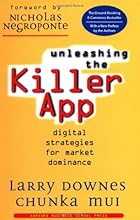
Downes is the author of the New York Times and Business Week business blockbuster, "Unleashing the Killer App: Digital Strategies for Market Dominance," which has sold nearly 200,000 copies. This pivotal work was named by the Wall Street Journal as one of the five most important books ever published on business and technology.
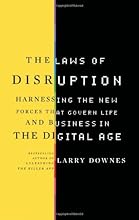
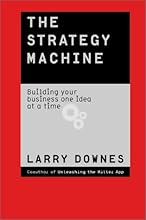
His latest book, “Pivot to the Future," co-authored with Omar Abbosh and Paul Nunes, details a dramatic new approach to strategy and execution for businesses facing constant technological disruption. His other publications include "Big Bang Disruption: Strategy in an Age of Devastating Innovation," "The Laws of Disruption: Harnessing the New Forces that Govern Life and Business in the Digital Age," and "The Strategy Machine." Each of these works explores different facets of innovation and its impact on traditional business models.
Downes writes regularly for The Harvard Business Review, Forbes, The Washington Post, and CNET, covering the intersection of technology, politics, and business. He also contributes to a variety of other prestigious publications, including The New York Times, USA Today, Inc., The Economist, Wired, Entrepreneur, Fast Company, Recode, The Hill, Congressional Quarterly, Slate, The European Business Review, The Boao Review, and The San Francisco Chronicle.
He has held faculty appointments at The University of Chicago Booth School of Business, Northwestern University Pritzker School of Law, and the University of California-Berkeley’s Haas School of Business, where he served as Associate Dean of the School of Information. From 2010-2019, he served as project director at the Georgetown Center for Business and Public Policy. From 2006-2010, he was a nonresident Fellow at the Stanford Law School Center for Internet & Society. Additionally, Downes is a Research Fellow with the Accenture Institute for High Performance, conducting extensive research into the challenges and strategies of dealing with disruptive innovations in various industries.
Contact a speaker booking agent to check availability on Larry Downes and other top speakers and celebrities.
Larry Downes Speaking Topics
-
Unleashing the Killer App.
Based on his bestselling book, Larry Downes provides a framework for rethinking the nature of business in today's wired economy, with digital strategies for market dominance. The goal is to take advantage of new technologies to create new goods and services and to thrive in, not just endure, the new business environment. Topics include intellectual capital as a source of new products, building an information supply chain, and overcoming obstacles to corporate transformation.
-
The Laws of Disruption.
With technology as the driving force for growth in almost every industry, the intersection of business strategy, technology, and law affects nearly everyone. Any organization that has regular interactions with customers in an online environment has an interest in addressing these issues. Larry Downes explains that as Americans spend more of their time living digital lives, organizations will no longer have sole authority over the way their business is run. Organic change, developed in concert with consumers, is more likely to be the future. Downes provides strategies for anticipating customer needs, and staying ahead of changes in regulation. He addresses privacy issues, copyrights, patents, software and more, with case studies from companies like Facebook, Google, and Research in Motion.

-
How do I book Larry Downes to speak at my event?
Our experienced booking agents have successfully helped clients around the world secure speakers like Larry Downes for speaking engagements, personal appearances, product endorsements, or corporate entertainment since 2002. Click the Check Availability button above and complete the form on this page to check availability for Larry Downes, or call our office at 1.800.698.2536 to discuss your upcoming event. One of our experienced agents will be happy to help you get speaking fee information and check availability for Larry Downes or any other speaker of your choice. -
What are the speaker fees for Larry Downes
Speaking fees for Larry Downes, or any other speakers and celebrities, are determined based on a number of factors and may change without notice. The estimated fees to book Larry Downes are $20,000 - $30,000 for live events and $10,000 - $20,000 for virtual events. For the most current speaking fee to hire Larry Downes, click the Check Availability button above and complete the form on this page, or call our office at 1.800.698.2536 to speak directly with an experienced booking agent. -
What topics does Larry Downes speak about?
Larry Downes is a keynote speaker and industry expert whose speaking topics include Author, Business, Business Authors, Business Consulting, Business Leadership, Corporate Strategy, Futurism, Innovation, Leadership, Marketing, Sales, Social Media, Strategic Leadership, Technology -
Where does Larry Downes travel from?
Larry Downes generally travels from Berkeley, CA, USA, but can be booked for private corporate events, personal appearances, keynote speeches, or other performances. For more details, please contact an AAE Booking agent. -
Who is Larry Downes’s agent?
AAE Speakers Bureau has successfully booked keynote speakers like Larry Downes for clients worldwide since 2002. As a full-service speaker booking agency, we have access to virtually any speaker or celebrity in the world. Our agents are happy and able to submit an offer to the speaker or celebrity of your choice, letting you benefit from our reputation and long-standing relationships in the industry. Please click the Check Availability button above and complete the form on this page including the details of your event, or call our office at 1.800.698.2536, and one of our agents will assist you to book Larry Downes for your next private or corporate function. -
What is a full-service speaker booking agency?
AAE Speakers Bureau is a full-service speaker booking agency, meaning we can completely manage the speaker’s or celebrity’s engagement with your organization from the time of booking your speaker through the event’s completion. We provide all of the services you need to host Larry Downes or any other speaker of your choice, including offer negotiation, contractual assistance, accounting and billing, and event speaker travel and logistics services. When you book a speaker with us, we manage the process of hosting a speaker for you as an extension of your team. Our goal is to give our clients peace of mind and a best-in-class service experience when booking a speaker with us. -
Why is AAE Speakers Bureau different from other booking agencies?
If you’re looking for the best, unbiased speaker recommendations, paired with a top-notch customer service experience, you’re in the right place. At AAE Speakers Bureau, we exclusively represent the interests of our clients - professional organizations, companies, universities, and associations. We intentionally do not represent the speakers we feature or book. That is so we can present our clients with the broadest and best performing set of speaker options in the market today, and we can make these recommendations without any obligation to promote a specific speaker over another. This is why when our agents suggest a speaker for your event, you can be assured that they are of the highest quality with a history of proven success with our other clients.
Larry Downes is a keynote speaker and industry expert who speaks on a wide range of topics such as Unleashing the Killer App., The Laws of Disruption., The New Industrial Revolution, Building An Information Supply Chain:, Technology Against The Law: The Coming Regulatory Nightmare And How To Stop It and "Extreme" Collaboration:. The estimated speaking fee range to book Larry Downes for your event is $20,000 - $30,000. Larry Downes generally travels from Berkeley, CA, USA and can be booked for (private) corporate events, personal appearances, keynote speeches, or other performances. Similar motivational celebrity speakers are Don Peppers, Richard Florida, Josh Linkner, Mike Walsh and Geoffrey Moore. Contact All American Speakers for ratings, reviews, videos and information on scheduling Larry Downes for an upcoming live or virtual event.
Need Quick Answers?
We are happy to help! Call us to speak with a booking agent about your event or specific speaker request.
Our celebrity booking agents can:
-
Gauge interest and check availability for speaking engagements, appearances or corporate events
-
Provide you with the speaking fee to book Larry Downes or other celebrity appearance fees
-
Give you personal recommendations for the best keynote speakers or celebrities
-
Assist you with any questions you have throughout the talent booking process
Speakers Similar to Larry Downes

Marketing & Sales Futurist, Customer Experience Thought...
View Profile
Leading Urbanist, Economist & Author of "The Rise of the...
View Profile
Authority on Innovation & Leadership, Serial Entrepreneur,...
View Profile
CEO of Tomorrow, Futurist, Authority on Change & Digital...
View Profile
Organizational Theorist, Disruptive Innovation Expert,...
View Profile
Futurist, Author & Visionary Business Advisor; Co-Founder &...
View Profile
Founder of Constellation Research, AI Expert, Author
View Profile
Futurist, CEO of Net Future Institute & Bestselling Author...
View Profile
International Expert on Business Strategy; Professor at...
View Profile
Leading Futurist, Disruptive Innovation Expert & Strategic...
View Profile
Marketing Consultant, Business Owner, Author
View Profile
Partner, Spencer Stuart & Author on Leadership and Career...
View Profile
Co-Founder, Chief Movement Officer of Luminate Labs, Expert...
View Profile
Digital Transformation Expert & Futurist, Bestselling...
View Profile
Social Entrepreneur, Futurist & Activist
View Profile
Marketing Strategist, Entrepreneur, Investor & Advisor to...
View Profile
Best-Selling Author & Technology Pioneer; Expert on...
View Profile
Generational Expert, Co-Founder of BridgeWorks,...
View Profile
Futurist, Inventor & Computer Scientist; Author of "How to...
View Profile
Award-Winning Entrepreneur; "Shark Tank" Investor; Founder...
View ProfileThis website is a resource for event professionals and strives to provide the most comprehensive catalog of thought leaders and industry experts to consider for speaking engagements. A listing or profile on this website does not imply an agency affiliation or endorsement by the talent.
All American Entertainment (AAE) exclusively represents the interests of talent buyers, and does not claim to be the agency or management for any speaker or artist on this site. AAE is a talent booking agency for paid events only. We do not handle requests for donation of time or media requests for interviews, and cannot provide celebrity contact information.
If you are the talent and wish to request a profile update or removal from our online directory, please submit a profile request form.