Writer, Historian & Journalist Whose Work Centers on the Epistemology of Democracy
Alice Dreger Biography
Alice Dreger is a writer, historian, and journalist, and most of her work centers on the epistemology of democracy. She is always working to find out what's true in the hope that it will lead people to treat each other better. She is the inaugural winner of the Courage Award from the Heterodox Academy and has also won awards for research, writing, teaching, and public service.
Dreger's bylines include the New York Times, Washington Post, Wall Street Journal, The Guardian, WIRED, Slate, the Atlantic, Pacific Standard, Aeon Magazine, the Chronicle of Higher Education, New Statesman, the Los Angeles Times, and the Chicago Tribune. Her best-known book is "Galileo’s Middle Finger: Heretics, Activists, and One Scholar’s Search for Justice," which argues that the pursuit of evidence is the most important ethical imperative of our time. Funded by a Guggenheim Fellowship and published by Penguin Press, the book has been praised in reviews in The New Yorker, Nature, Science, Forbes, New York Magazine, Human Nature, and Salon.
Dreger's work is often aimed at getting past partisan politics. She earned her Ph.D. in History and Philosophy of Science from Indiana University, and is a recipient of an Outstanding Leadership Award in Comprehensive Sexuality Education from SIECUS, Planned Parenthood, Advocates for Youth, GLSEN (the Gay, Lesbian, Straight Education Network), and the Healthy Teen Network.
Dreger frequently delivers keynotes and plenaries and has given about 200 invited lectures. Her TEDx lecture, "Is Anatomy Destiny?," has been viewed over a million times and she has appeared as a guest expert on media programs such as Oprah, Savage Love, Good Morning America, and NPR, and in many original documentaries, including for A&E, ABC, Discovery, PBS, and HBO.
Contact a speaker booking agent to check availability on Alice Dreger and other top speakers and celebrities.
Alice Dreger Speaking Topics
-
Who Should Count as a Woman on the Playing Field? The Question of Intersex and Trans in Sports
This talk begins with a review of how many sports have historically been divided by gender (man/woman), although we’ve generally pretended the division is by sex (male/female). The more that we learn about gender and sex, the more we know the drawing sex and gender divisions is not so easy. So what should happen in sports? This lecture explores this question, taking into account biology, the nature of sport (including the value of fairness), and social justice concerns. The speaker, who has consulted on this question with the International Olympic Committee’s Medical Commission, will parse out the issues and offer a few possible solutions.
-
Should We Try to Engineer Physical "Normality" in Children?
Doctors are often quick to offer “normalizing” interventions when a child has a body that challenges social norms. Surgeons offer their services to “fix” children born with atypical genitals and to separate children born conjoined. Endocrinologists offer growth hormone to healthy children who are short. What’s wrong with that kind of approach? This lecture answers that question and will suggest that what would work better is attention to outcomes data (to know what really “works” for these children) and attempts at changing society. The speaker draws on her background as an historian of medicine and patient advocate.
Alice Dreger Videos

The problem with moral outrage on the internet | Alice Dreger
Alice Dreger says that moral outrage on the internet is often just virtue signaling.

Alice Dreger's keynote address on academic freedom at FIRE's ...
Alice Dreger delivers a keynote address on academic freedom at FIRE's 2017 faculty conference.
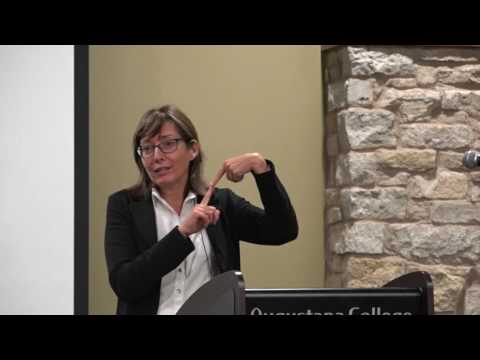
Fall Symposium Day 2016: Alice Dreger
Alice Dreger, history of medicine and science, delivers her address, "Galileo’s Middle Finger: Why Social Progress Depends on the Protection of...

-
How do I book Alice Dreger to speak at my event?
Our experienced booking agents have successfully helped clients around the world secure speakers like Alice Dreger for speaking engagements, personal appearances, product endorsements, or corporate entertainment since 2002. Click the Check Availability button above and complete the form on this page to check availability for Alice Dreger, or call our office at 1.800.698.2536 to discuss your upcoming event. One of our experienced agents will be happy to help you get speaking fee information and check availability for Alice Dreger or any other speaker of your choice. -
What are the speaker fees for Alice Dreger
Speaking fees for Alice Dreger, or any other speakers and celebrities, are determined based on a number of factors and may change without notice. The estimated fees to book Alice Dreger are under $10,000 for live events and available upon request for virtual events. For the most current speaking fee to hire Alice Dreger, click the Check Availability button above and complete the form on this page, or call our office at 1.800.698.2536 to speak directly with an experienced booking agent. -
What topics does Alice Dreger speak about?
Alice Dreger is a keynote speaker and industry expert whose speaking topics include Author, Business, Business Growth, Business Leadership, Communication, Economy, Entrepreneurship, Futurism, History, Influential Women, Innovation, Inspirational, Leadership, Marketing, Science, Social Sciences, STEM, Technology, TED, Women in Business, Women in Tech -
Where does Alice Dreger travel from?
Alice Dreger generally travels from East Lansing, MI, USA, but can be booked for private corporate events, personal appearances, keynote speeches, or other performances. For more details, please contact an AAE Booking agent. -
Who is Alice Dreger’s agent?
AAE Speakers Bureau has successfully booked keynote speakers like Alice Dreger for clients worldwide since 2002. As a full-service speaker booking agency, we have access to virtually any speaker or celebrity in the world. Our agents are happy and able to submit an offer to the speaker or celebrity of your choice, letting you benefit from our reputation and long-standing relationships in the industry. Please click the Check Availability button above and complete the form on this page including the details of your event, or call our office at 1.800.698.2536, and one of our agents will assist you to book Alice Dreger for your next private or corporate function. -
What is a full-service speaker booking agency?
AAE Speakers Bureau is a full-service speaker booking agency, meaning we can completely manage the speaker’s or celebrity’s engagement with your organization from the time of booking your speaker through the event’s completion. We provide all of the services you need to host Alice Dreger or any other speaker of your choice, including offer negotiation, contractual assistance, accounting and billing, and event speaker travel and logistics services. When you book a speaker with us, we manage the process of hosting a speaker for you as an extension of your team. Our goal is to give our clients peace of mind and a best-in-class service experience when booking a speaker with us. -
Why is AAE Speakers Bureau different from other booking agencies?
If you’re looking for the best, unbiased speaker recommendations, paired with a top-notch customer service experience, you’re in the right place. At AAE Speakers Bureau, we exclusively represent the interests of our clients - professional organizations, companies, universities, and associations. We intentionally do not represent the speakers we feature or book. That is so we can present our clients with the broadest and best performing set of speaker options in the market today, and we can make these recommendations without any obligation to promote a specific speaker over another. This is why when our agents suggest a speaker for your event, you can be assured that they are of the highest quality with a history of proven success with our other clients.
Alice Dreger is a keynote speaker and industry expert who speaks on a wide range of topics such as Who Should Count as a Woman on the Playing Field? The Question of Intersex and Trans in Sports, Should We Try to Engineer Physical "Normality" in Children? , Reasons to Add—and Reasons NOT to add—an “I” to LGBTQ in Health Care , Good Causes, Bad Acts: Scrutinizing Ends and Means in Medical Activism and Galileo’s Middle Finger: Why Social Progress Depends on the Protection of Academic Freedom . The estimated speaking fee range to book Alice Dreger for your event is available upon request. Alice Dreger generally travels from East Lansing, MI, USA and can be booked for (private) corporate events, personal appearances, keynote speeches, or other performances. Similar motivational celebrity speakers are Amy Jo Martin, Maddy Dychtwald, Shama Hyder, Sarah Lacy and Esther Dyson. Contact All American Speakers for ratings, reviews, videos and information on scheduling Alice Dreger for an upcoming live or virtual event.
Need Quick Answers?
We are happy to help! Call us to speak with a booking agent about your event or specific speaker request.
Our celebrity booking agents can:
-
Gauge interest and check availability for speaking engagements, appearances or corporate events
-
Provide you with the speaking fee to book Alice Dreger or other celebrity appearance fees
-
Give you personal recommendations for the best keynote speakers or celebrities
-
Assist you with any questions you have throughout the talent booking process
Speakers Similar to Alice Dreger

Angel Investor & CEO of Renegade Global; NYT Bestselling...
View Profile
Top 50 Female Futurist, Co-founder of Age Wave, Author
View Profile
Bestselling Author, CEO of Zen Media, Digital Marketing...
View Profile
Technology Journalist; Founder & CEO of PandoMedia and...
View Profile
Investor in Health Tech, Founder of Wellville,...
View Profile
NYC Real Estate Queen, Shark Tank "Shark", Host of...
View Profile
Leadership Expert, Change Management Specialist,...
View Profile
Architect; Entrepreneur; Founder & CEO of Cheekd
View Profile
Leadership Trainer, Researcher, Author & Co-founder of...
View Profile
Smithsonian Institution Distinguished Scholar & Author of ...
View Profile
Oracle & Entrepreneur; Founder of WHY and creator of Super...
View Profile
Former COO of Meta, Bestselling Author & Founder of...
View Profile
Artificial Intelligence & Innovation Expert; Former...
View Profile
Founder/COO of TicketCake.com, a natural born doer, and a...
View Profile
Wall Street Trailblazer, Founder of Ellevest, a...
View Profile
CEO & Founder of Zuckerberg Media; Bestselling Author;...
View Profile
Future of Work & Change Leadership Expert; Author of "The...
View Profile
Digital Entrepreneur, Co-founder of Zady, Social Media...
View Profile
Co-Founder of Gilt, CEO of GLAMSQUAD, Managing Partner of...
View Profile
Entrepreneur, Growth Catalyst, Founder & CEO of Ms.Tech
View ProfileThis website is a resource for event professionals and strives to provide the most comprehensive catalog of thought leaders and industry experts to consider for speaking engagements. A listing or profile on this website does not imply an agency affiliation or endorsement by the talent.
All American Entertainment (AAE) exclusively represents the interests of talent buyers, and does not claim to be the agency or management for any speaker or artist on this site. AAE is a talent booking agency for paid events only. We do not handle requests for donation of time or media requests for interviews, and cannot provide celebrity contact information.
If you are the talent and wish to request a profile update or removal from our online directory, please submit a profile request form.