WNBA Champion & 4x Olympic Gold Medalist; Author of "Don't Let the Lipstick Fool You" and "From the Court to the Boardroom"; Co-Founder, The Lockwood Group
Lisa Leslie Biography
Lisa Leslie, a former WNBA player, is known for her extensive career both on and off the basketball court. As a player, she was a dominant force in the women’s game, winning numerous accolades and achieving historic sports milestones. Leslie's career has been characterized by her skill and dedication to the sport.
As a four-time Olympic Gold Medalist, Leslie led the gold-winning Team USA in 1996, 2000, 2004, and 2008, becoming the first team sport athlete to win four consecutive Olympic Gold Medals. In 2001, she became the first WNBA player to win the regular season MVP, the All-Star Game MVP, and the playoff MVP in the same season. She led the Los Angeles Sparks to their first WNBA Championship that year and again in 2002. Leslie is recognized as the first woman to slam-dunk in a professional basketball game.
Beyond basketball, Leslie co-founded the ultra-luxury national real estate firm, Aston Rose, demonstrating her prowess in the real estate industry. As a media personality, she began her career as a sports commentator and analyst in 2004, working with networks such as ESPN, ABC, Turner, Fox Sports Net, and NBC, and covering the 2012 Olympics for NBC. She is currently co-hosting the CBS Sports show "We Need To Talk."
Leslie has also made appearances in television shows such as "Martin," "Sister Sister," "Moesha," and "One on One," and acted in movies including "Love & Basketball," "Think Like a Man," and "Uncle Drew." She authored the book "Don’t Let the Lipstick Fool You" in 2008. Additionally, Leslie launched the Lisa Leslie Basketball & Leadership Academy in 2012, demonstrating her commitment to developing future leaders and athletes.
Her philanthropic efforts are notable, including being invited to the White House by multiple presidents. Leslie resides with her husband, Michael Lockwood, and their two children, Lauren Jolie and Michael Joseph, in Boca Raton, Florida.
Contact a speaker booking agent to check availability on Lisa Leslie and other top speakers and celebrities.
Lisa Leslie Videos
Achieve All-Star Communication and Take the Lead

American Dental Hygienists Association, Crest + Oral B
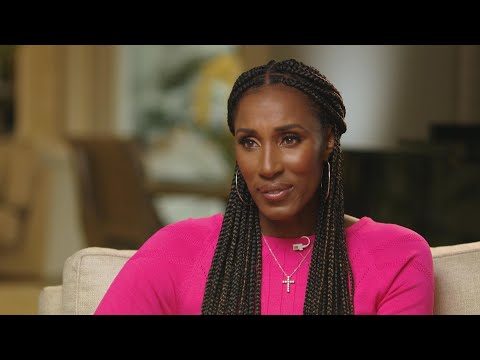
WNBA star Lisa Leslie on Kobe Bryant's rise and legacy
WNBA and Olympic champion Lisa Leslie had been friends with Kobe Bryant ever since the two met near the start of their careers over 20 years ago. As...


.png "Commencement Speakers")
-
How do I book Lisa Leslie to speak at my event?
Our experienced booking agents have successfully helped clients around the world secure speakers like Lisa Leslie for speaking engagements, personal appearances, product endorsements, or corporate entertainment since 2002. Click the Check Availability button above and complete the form on this page to check availability for Lisa Leslie, or call our office at 1.800.698.2536 to discuss your upcoming event. One of our experienced agents will be happy to help you get speaking fee information and check availability for Lisa Leslie or any other speaker of your choice. -
What are the speaker fees for Lisa Leslie
Speaking fees for Lisa Leslie, or any other speakers and celebrities, are determined based on a number of factors and may change without notice. The estimated fees to book Lisa Leslie are $50,000 - $100,000 for live events and $20,000 - $30,000 for virtual events. For the most current speaking fee to hire Lisa Leslie, click the Check Availability button above and complete the form on this page, or call our office at 1.800.698.2536 to speak directly with an experienced booking agent. -
What topics does Lisa Leslie speak about?
Lisa Leslie is a keynote speaker and industry expert whose speaking topics include Anti-Racism, Athlete, Author, Basketball, Black Heritage, Black History Month, Civil Rights, College, Commencement, Diversity & Inclusion, Education, Empowerment, Female Leadership, Fitness, Health & Wellness, Influential Women, Inspirational, Motivational, Nutrition, Olympic Athlete, Peak Performance, Personal Growth, Real Estate, Social Activism, Social Justice, Sports, Sports Journalism & Broadcasting, Sports Motivation, Women, Women in Business, Women's Empowerment, Women's Health, Women's History Month -
Where does Lisa Leslie travel from?
Lisa Leslie generally travels from Boca Raton, FL, USA, but can be booked for private corporate events, personal appearances, keynote speeches, or other performances. For more details, please contact an AAE Booking agent. -
Who is Lisa Leslie’s agent?
AAE Speakers Bureau has successfully booked keynote speakers like Lisa Leslie for clients worldwide since 2002. As a full-service speaker booking agency, we have access to virtually any speaker or celebrity in the world. Our agents are happy and able to submit an offer to the speaker or celebrity of your choice, letting you benefit from our reputation and long-standing relationships in the industry. Please click the Check Availability button above and complete the form on this page including the details of your event, or call our office at 1.800.698.2536, and one of our agents will assist you to book Lisa Leslie for your next private or corporate function. -
What is a full-service speaker booking agency?
AAE Speakers Bureau is a full-service speaker booking agency, meaning we can completely manage the speaker’s or celebrity’s engagement with your organization from the time of booking your speaker through the event’s completion. We provide all of the services you need to host Lisa Leslie or any other speaker of your choice, including offer negotiation, contractual assistance, accounting and billing, and event speaker travel and logistics services. When you book a speaker with us, we manage the process of hosting a speaker for you as an extension of your team. Our goal is to give our clients peace of mind and a best-in-class service experience when booking a speaker with us. -
Why is AAE Speakers Bureau different from other booking agencies?
If you’re looking for the best, unbiased speaker recommendations, paired with a top-notch customer service experience, you’re in the right place. At AAE Speakers Bureau, we exclusively represent the interests of our clients - professional organizations, companies, universities, and associations. We intentionally do not represent the speakers we feature or book. That is so we can present our clients with the broadest and best performing set of speaker options in the market today, and we can make these recommendations without any obligation to promote a specific speaker over another. This is why when our agents suggest a speaker for your event, you can be assured that they are of the highest quality with a history of proven success with our other clients.
Lisa Leslie is a keynote speaker and industry expert who speaks on a wide range of topics such as Goal Setting, Leadership, Raising Self-Esteem, Team Work Makes The Dream Work (for business teams), Volunteerism and Life Support (Panel discussion for women). The estimated speaking fee range to book Lisa Leslie for your event is $50,000 - $100,000. Lisa Leslie generally travels from Boca Raton, FL, USA and can be booked for (private) corporate events, personal appearances, keynote speeches, or other performances. Similar motivational celebrity speakers are Daymond John, Sugar Ray Leonard, Dominique Dawes, Emmitt Smith and Jackie Joyner-Kersee. Contact All American Speakers for ratings, reviews, videos and information on scheduling Lisa Leslie for an upcoming live or virtual event.
Need Quick Answers?
We are happy to help! Call us to speak with a booking agent about your event or specific speaker request.
Our celebrity booking agents can:
-
Gauge interest and check availability for speaking engagements, appearances or corporate events
-
Provide you with the speaking fee to book Lisa Leslie or other celebrity appearance fees
-
Give you personal recommendations for the best keynote speakers or celebrities
-
Assist you with any questions you have throughout the talent booking process
Speakers Similar to Lisa Leslie

Award-Winning Entrepreneur; "Shark Tank" Investor; Founder...
View Profile
Legendary Sports Icon, Olympic Champion & Hall of Famer;...
View Profile
Three-Time Olympian, Olympic Gold Medalist, & Gymnastics...
View Profile
Three-Time Super Bowl Champion & Leading Rusher in NFL...
View Profile
Olympic Legend & American Record-Holder in the Long Jump; ...
View Profile
First Female F-14 Fighter Pilot in the U.S. Navy, Pioneer...
View Profile
America’s First Black Female Combat Pilot, Mindset & Peak...
View Profile
Global Fitness Instructor & Makeup Artist; New York Times...
View Profile
Entrepreneur, Author & Podcast Host; Sports Motivation...
View Profile
Change & Leadership Expert, Author, Founding CEO of "Change...
View Profile
Entrepreneur, Podcast Host of "Torched", Women's...
View Profile
Professional Surfer & Shark Attack Survivor; Inspiration...
View Profile
Former NFL & College Head Coach & ESPN Football Analyst
View Profile
Leading Authority on 21st Century Teamwork, Collaboration,...
View Profile
Retired Professional Soccer Player, Two-Time FIFA Women's...
View Profile
Track & Field Athlete, Olympic Champion, 12-Time Gold...
View Profile
Eight-Time Olympic Medalist, Hall of Fame Short-Track...
View Profile
Inspirational Speaker, Entrepreneur & Bestselling Author;...
View Profile
Famous Environmental Activist; Consumer Advocate &...
View ProfileThis website is a resource for event professionals and strives to provide the most comprehensive catalog of thought leaders and industry experts to consider for speaking engagements. A listing or profile on this website does not imply an agency affiliation or endorsement by the talent.
All American Entertainment (AAE) exclusively represents the interests of talent buyers, and does not claim to be the agency or management for any speaker or artist on this site. AAE is a talent booking agency for paid events only. We do not handle requests for donation of time or media requests for interviews, and cannot provide celebrity contact information.
If you are the talent and wish to request a profile update or removal from our online directory, please submit a profile request form.